


Medical Grade Skincare with Retinol: A Safe Layering Guide
Last Updated: November 15, 2026
Quick Summary
Yes, you can use medical grade skincare with retinol, but the pairing rewards patience and punishes enthusiasm. Layer retinol at night with barrier-supporting products like moisturizer and niacinamide, and alternate exfoliating acids on separate evenings to avoid irritation.
- Apply retinol two nights a week, buffered with moisturizer, then add one night per week once skin settles.
- Let skin dry about five minutes before applying a pea-sized amount of retinol to the whole face.
- Skip retinol on nights you use exfoliating acids and give each active its own evening.
- Benzoyl peroxide belongs in the morning and retinol at night because oxygen can degrade retinol.
- Mild redness, dryness, and light flaking in the first few weeks are normal and usually fade.
Table of Contents
- Can You Use Medical Grade Skincare with Retinol?
- How to Use Retinol at Night Without Overloading Your Skin
- Can You Use Retinol with Hyaluronic Acid?
- What Skincare Ingredients Should Not Be Mixed with Retinol
- Retinol Side Effects: What's Normal and What's Not
- How to Assess Medical Grade Retinol Strength and Formulation
- Build Your Retinol Routine with MEINTU
- Frequently Asked Questions
Can You Use Medical Grade Skincare with Retinol?
Yes, you can use medical grade skincare with retinol, but the pairing rewards patience and punishes enthusiasm. Retinol is a vitamin A derivative that speeds up skin cell turnover.
The trick is layering, not stacking. A night routine built around retinol works best when it is paired with barrier-supporting products rather than extra actives.
Here is the short answer in table form:
| Question | Answer | Why It Matters |
|---|---|---|
| Can you combine them? | Yes, with care | Both increase cell renewal |
| When to apply retinol | Night only | Sunlight degrades it |
| What to pair it with | Moisturizer, niacinamide | Supports the skin barrier |
| What to avoid | Acids, benzoyl peroxide | Raises irritation risk |
A common mistake is starting a strong retinol and an exfoliating acid in the same week, which can lead to redness, dryness, and peeling.
Below, we break down exactly how to layer these products, which ingredients to keep apart, and how to tell normal side effects from a problem.
How to Use Retinol at Night Without Overloading Your Skin
The safest approach is a slow start: apply retinol two nights a week, buffer it with moisturizer, and add one night per week only after your skin settles.
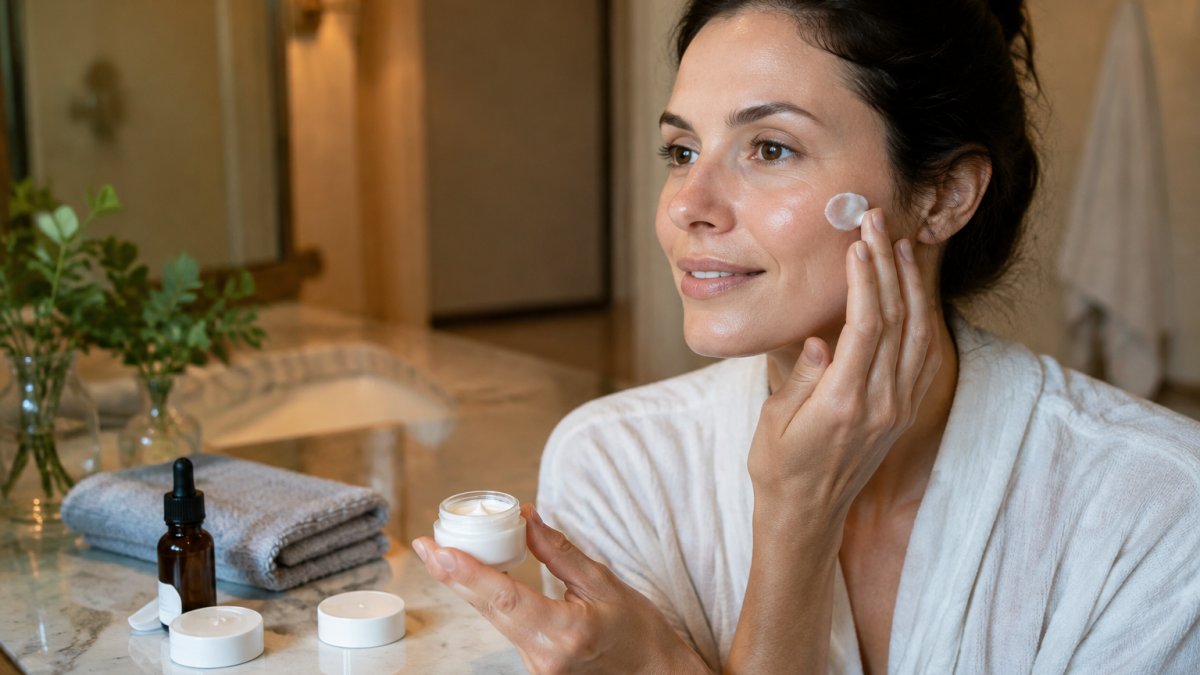
A simple night routine looks like this:
- Cleanse with a gentle, non-foaming wash.
- Wait until skin is fully dry, about five minutes.
- Apply a pea-sized amount of retinol to the whole face.
- Follow with a barrier moisturizer.
- Finish with a thin layer of facial oil if skin feels tight.
Watch out: applying retinol to damp skin may increase irritation, so it is generally advisable to let your face dry first.
Skip retinol on nights you use exfoliating acids. Give each active its own evening.
Can You Use Retinol with Hyaluronic Acid?
Yes, and this is one of the best pairings in skincare. Hyaluronic acid is a humectant that pulls water into the skin, which offsets the dryness retinol can cause. Apply hyaluronic acid first on damp skin, then retinol, then a moisturizer to seal it in.
The order matters more than the products. Think thin to thick:
- Hyaluronic acid serum on damp skin
- Retinol on top
- Moisturizer to lock in hydration
Niacinamide is another good partner. It supports the skin barrier and can ease redness.
What Skincare Ingredients Should Not Be Mixed with Retinol
Most retinol problems come from what you put on your face next to it, not from retinol itself. The table below is a practical compatibility guide: it explains why each ingredient clashes, whether you can layer it, and when to alternate instead. The general rule is that retinol belongs at night, and any ingredient that increases cell turnover or strips the barrier gets its own evening.
| Ingredient | Why It Clashes with Retinol | Layer or Alternate? | Practical Rule |
|---|---|---|---|
| Alpha hydroxy acids (glycolic, lactic) | Extra exfoliation on top of retinol's cell-turnover effect | Alternate | Use the acid on a different night; never in the same routine |
| Beta hydroxy acids (salicylic) | Same exfoliation load, plus dryness | Alternate | Keep BHA to mornings or alternate nights |
| Benzoyl peroxide | Oxidizing ingredient can reduce retinol potency and add irritation | Separate | Benzoyl peroxide in the morning, retinol at night |
| Vitamin C (L-ascorbic acid) | Low pH and potential irritation when layered together | Separate | Vitamin C in the morning under sunscreen, retinol at night |
| Other retinoids (retinal, tretinoin, adapalene) | Doubles the vitamin A dose | Never layer | Pick one retinoid and use it consistently |
| Niacinamide | Generally compatible; supports the barrier | Layer | Apply niacinamide first, then retinol, then moisturizer |
| Hyaluronic acid | Compatible humectant that offsets dryness | Layer | Apply on damp skin before retinol |
| Ceramides and peptides | Compatible barrier support | Layer | Use in the moisturizer step after retinol |
A few mechanisms are worth knowing. Alpha hydroxy acids and beta hydroxy acids loosen the bonds between dead skin cells, and retinol already accelerates turnover, so using both in one evening stacks the same effect and raises the risk of redness and peeling. Benzoyl peroxide works by releasing oxygen, which can degrade retinol before it has a chance to work, so the two belong in different routines. Vitamin C is not dangerous with retinol, but the low-pH formula and the retinol can both sting when layered, so morning and night is the cleaner split.
Watch out: do not assume that because two products are both "medical grade" they can be layered. A medical grade exfoliating acid and a medical grade retinol are still two exfoliating actives, and the same alternate-night rule applies.
If you are using a prescription retinoid such as tretinoin, check with your prescriber before adding any other retinoid or exfoliating acid.
Retinol Side Effects: What's Normal and What's Not
Mild redness, dryness, and light flaking in the first few weeks are normal. These signs usually fade as your skin adjusts. Severe burning, swelling, or a rash that spreads is not normal and means you should stop using the product.
Normal signs to expect:
- Slight tightness after application
- Light flaking around the nose and mouth
- Mild redness that settles by morning
Signs to stop and check with a dermatologist:
- Painful burning or stinging
- Swelling or hives
- Cracking or bleeding skin
Some people also notice breakouts early on, sometimes called purging. If new acne keeps appearing after two months, check with a dermatologist about whether the product suits your skin.
How to Assess Medical Grade Retinol Strength and Formulation
Start with a definition: "medical grade" is not a standardized regulatory category, and the term is not a formal tier under United States cosmetics rules. In practice, the term usually means a product sold through or recommended by a skincare professional, often with higher active concentrations than mass-market products. That means the label alone tells you little; you have to read the formula and follow the instructions on the package.
When you evaluate a retinol product, look at four things:
- Form of vitamin A: retinol, retinal, and encapsulated retinol behave differently.
- Concentration: start low if you are new.
- Support ingredients: niacinamide, ceramides, and peptides help tolerance and barrier support.
- Packaging and instructions: opaque or airless pumps protect potency, and the product's own directions should set your frequency, not a generic rule.
A higher percentage is not automatically better. The formula around the retinol, and how faithfully you follow the introduction schedule, matter more than the number on the box.
A Gradual Introduction Schedule
Use this as a starting framework and adjust to your skin. The goal is to reach a tolerable frequency, not the highest one.
| Week | Beginner (new to retinol) | Experienced User (returning after a break) |
|---|---|---|
| 1 | Two nights, buffered with moisturizer | Three nights, applied to dry skin |
| 2 | Two nights, no change | Three nights, no change |
| 3 | Three nights if skin is calm | Four nights if skin is calm |
| 4 | Three nights, assess | Four to five nights, assess |
| 5-6 | Add one night only if no irritation | Move toward nightly if tolerated |
Retinol with Professional Treatments and Prescriptions
If you are having in-office procedures such as chemical peels, laser treatments, or microneedling, ask the clinician performing the treatment when to pause retinol. If you are having in-office procedures, ask the clinician performing the treatment when to pause retinol and follow their instructions. The same applies to prescription retinoids: do not add an over-the-counter retinol on top of a prescription, and coordinate any changes with the prescriber.
Pregnancy, Breastfeeding, and Sensitive Skin
If you are pregnant or breastfeeding, talk to your clinician before using retinol or any retinoid. People with sensitive or compromised skin, such as after a procedure or during a flare of eczema, should also get clinician direction before starting retinol.
Build Your Retinol Routine with MEINTU
A good retinol routine is simple: cleanse, hydrate, treat, and protect.
MEINTU is a family-owned skincare and wellness brand that focuses on transparent ingredients, purposeful formulations, and rigorous quality standards.
If you are new to retinol, start with a simple framework before adding actives. Our guide on how to build a simple skincare routine for beginners walks through the core steps so your retinol has a stable base.
Watch out: adding a new active every week makes it hard to tell which product is causing a reaction.
Building a retinol routine that actually works takes patience, and the right supporting products make the difference between glowing skin and a irritated barrier. MEINTU brings premium ingredients, science-inspired formulations, and rigorous quality standards to everyday skincare. Explore our skincare collection to find gentle, dependable products that support your routine, and get started with MEINTU for simpler, more confident self-care.
Frequently Asked Questions
Can you use medical grade skincare with retinol every night?
Not at first. Start with medical grade skincare and retinol two or three nights a week, then add a night every two weeks if your skin stays calm. Beginners often start with retinol a few times a week, and a clinician can advise on the right frequency for your skin. Always follow with a moisturizer and use sunscreen daily.
What skincare ingredients should not be mixed with retinol?
Avoid layering retinol with alpha hydroxy acids, beta hydroxy acids, and benzoyl peroxide in the same routine. These active ingredients can raise the risk of redness, dryness, and peeling. Use them on alternate nights or at different times of day. Vitamin C is best used in the morning, while retinol goes at night.
Does medical grade retinol help with wrinkles?
Retinol speeds up skin cell turnover, which is why it is often discussed for the appearance of fine lines over time. Sunscreen is essential because retinol can make skin more sensitive to the sun.
What should you do if retinol irritates your skin?
If retinol irritates your skin, consider pausing it and check with a dermatologist before restarting. Medical grade skincare with retinol should be introduced slowly to protect your skin barrier.


