


How to Improve Immune System Step by Step: 2026 Guide
Table of Contents
- Your Step-by-Step Immune System Roadmap
- Step 1: Build Your Plate with Foods That Support Immune Health
- Step 2: Choose the Best Vitamins for Immune System Support
- Step 3: Understand the Impact of Sleep on Immunity
- Step 4: Move Your Body to Strengthen Immune Response
- Step 5: Manage Stress and Support Your Circadian Rhythm
- Step 6: Consider Targeted Supplements to Improve Immune System Function
- Common Mistakes That Weaken Your Immune System
- Frequently Asked Questions
Last Updated: September 9, 2026
Your Step-by-Step Immune System Roadmap
Your immune system is a complex network of cells, tissues, and organs that respond to consistent, daily inputs. Lasting immune system function is built through layered habits that compound over time, not a single magic supplement or crash diet.
MEINTU is a family-owned wellness brand. This guide breaks down how to improve immune system step by step, moving beyond generic advice into actionable protocols.
The six steps below are designed for busy families who want preventative health without overhauling their lives.
Why a Step-by-Step Approach Works Better Than Quick Fixes
The immune system functions on a delay. When you eat a nutrient-dense meal today, the benefits to your cellular health unfold over days and weeks, not minutes. A step-by-step protocol respects this biology by giving your body consistent raw materials and signals.
Quick fixes fail because they create physiological stress. Drastic detoxes, extreme fasting, or megadosing single vitamins can spike cortisol and inflammation, which suppress immune response. The stepwise method builds metabolic health gradually, allowing your gut microbiome and white blood cells to adapt without shock.
Step 1: Build Your Plate with Foods That Support Immune Health
The most direct lever you control is your fork. Foods that support immune health are rich in antioxidants, omega-3 fatty acids, and fiber. To truly optimize your immune response, you need to move beyond the 'rainbow rule' and understand the specific mechanisms at play.
The Gut-Immune Axis: Your First Line of Defense
The majority of your immune tissue, up to 70%, lives in your gut-associated lymphoid tissue (GALT), actively regulated by the trillions of bacteria in your microbiome (the NIH). Those bacteria eat fiber. When you consume 25 to 30 grams of fiber daily, your gut bacteria ferment it to produce short-chain fatty acids (SCFAs) like butyrate, propionate, and acetate, which bind to receptors on immune cells to signal a balanced, non-inflammatory state (peer-reviewed research). This is the gut-immune axis in action.
Without sufficient fiber, your gut lining can become permeable, a condition often called 'leaky gut', allowing pathogens and undigested particles to trigger chronic inflammation. This taxes your immune system and makes you more susceptible to illness. To hit your daily fiber target, prioritize these foods:
- Prebiotic Powerhouses: Garlic, onions, leeks, asparagus, and Jerusalem artichokes are rich in inulin, a prebiotic fiber that specifically feeds beneficial Bifidobacteria.
- Resistant Starch: Cooked and cooled potatoes, green bananas, and oats contain resistant starch, which acts like a soluble fiber in the colon.
- Diverse Plant Sources: Aim for 30 different plant foods per week. Each plant type feeds a different bacterial strain, and microbial diversity is a hallmark of a robust immune system.
A Practical Plate Protocol
Forget complex diet rules. Use this simple template for lunch and dinner to ensure you are covering your bases:
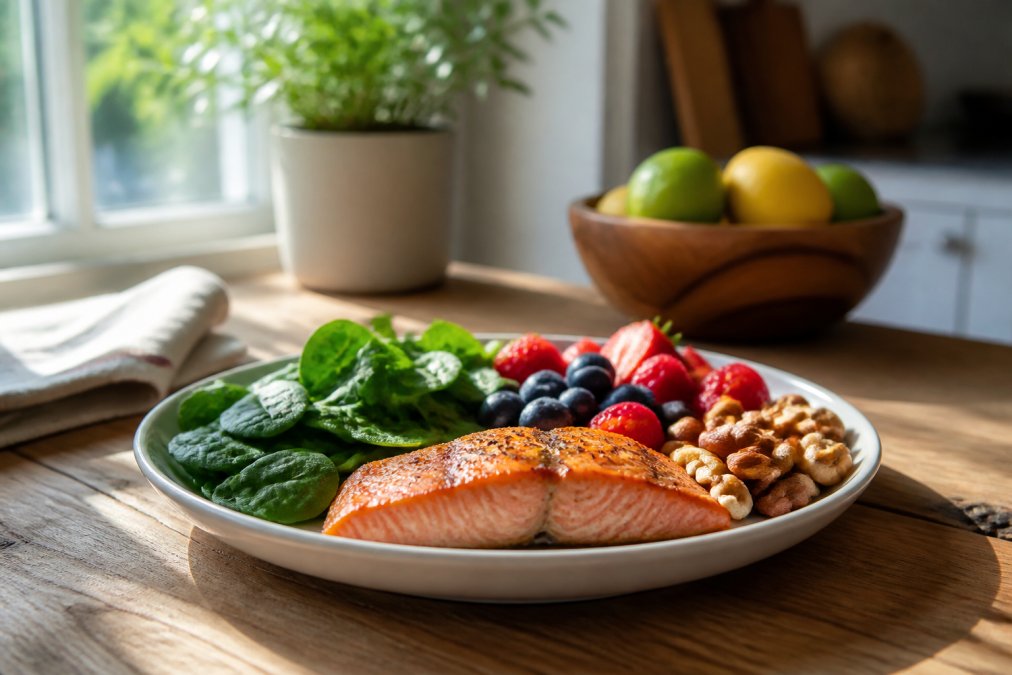
- Fill half your plate with non-starchy vegetables. Think leafy greens (spinach, kale, Swiss chard), cruciferous vegetables (broccoli, cauliflower, Brussels sprouts), and colorful peppers. These provide folate, vitamin C, and a host of flavonoids.
- Dedicate a quarter of your plate to quality protein. This includes wild-caught salmon (rich in omega-3s), pasture-raised poultry, legumes, or tofu. Protein supplies the amino acids your body uses to build antibodies and cytokines.
- Use the remaining quarter for complex carbohydrates. Choose quinoa, brown rice, sweet potatoes, or beans. These provide the fiber your gut bacteria need and sustained energy without spiking blood sugar.
- Add a source of healthy fat. Drizzle extra-virgin olive oil, add a handful of walnuts, or slice an avocado. Healthy fats are crucial for the absorption of fat-soluble vitamins A, D, E, and K, which are all vital for immune function.
The Role of Polyphenols
Beyond fiber, plant foods are rich in polyphenols, compounds that act as antioxidants and directly modulate immune cell activity. Berries, dark chocolate (70%+ cacao), green tea, and turmeric are particularly potent. Curcumin, the active compound in turmeric, has been shown to downregulate inflammatory pathways, but its absorption is poor (PubMed). Pair it with black pepper, which contains piperine, to enhance bioavailability by up to 2,000%.
Hydration: The Overlooked Nutrient
Water is essential for the production of lymph, the fluid that carries white blood cells throughout your body. Even mild dehydration, as little as 1-2% loss of body weight, can thicken the lymph fluid, slowing the circulation of immune cells. Aim to drink consistently throughout the day. A simple rule is to drink a glass of water upon waking, with each meal, and before bed. Your urine color should be a pale straw yellow; if it is darker, you need more fluids.
Step 2: Choose the Best Vitamins for Immune System Support
Specific micronutrients play outsized roles in immune defense. The best vitamins for immune system support are not exotic; they are the ones most people are subtly deficient in. Vitamin D is the most critical, as it modulates both the innate and adaptive immune response. Many adults have a vitamin D deficiency without knowing it, especially during winter months.
Vitamin C and Zinc are the other pillars. Vitamin C supports the function of white blood cells and acts as a powerful antioxidant, while zinc is required for the development and activation of T-cells. Get these from food first, then fill gaps with a targeted supplement. Look for products with transparent labeling and third-party testing.
Step 3: Understand the Impact of Sleep on Immunity
Sleep is not a passive state of rest; it is the immune system's most active maintenance shift. The impact of sleep on immunity is profound and bidirectional: sleep deprivation suppresses immune function, while a robust immune response triggers increased sleep.
The Circadian Rhythm: Your Immune System's Conductor
Your body operates on a 24-hour internal clock, the circadian rhythm, synchronized by light exposure. This master clock in the brain's suprachiasmatic nucleus (SCN) orchestrates the timing of nearly every physiological process, including immune function. Here is what happens when your rhythm is aligned:
- Cortisol and Melatonin: In the morning, bright light suppresses melatonin and triggers a healthy cortisol spike, which mobilizes immune cells from the bone marrow into the bloodstream. At night, as light fades, melatonin rises, signaling the body to prepare for rest. Melatonin itself is a powerful antioxidant that directly supports immune cells.
- Immune Cell Trafficking: Your immune cells do not circulate randomly. They follow a circadian pattern. During the day, when you are active and exposed to pathogens, pro-inflammatory cells (like Th17 cells) are more abundant in the blood. At night, during deep sleep, anti-inflammatory cells (like regulatory T-cells) and natural killer (NK) cells become more active, patrolling for infected or cancerous cells.
- Cytokine Production: During deep, slow-wave sleep, your body releases growth hormone and specific cytokines, including interleukin-1 (IL-1) and tumor necrosis factor (TNF). These are the signaling molecules that promote the proliferation and activation of immune cells. Skimping on sleep, even for one night, can reduce the activity of NK cells.
The Cost of Social Jetlag
Sleep hygiene is not just about duration; it is about consistency. Going to bed and waking at the same time, even on weekends, anchors your circadian rhythm. When you sleep in on weekends, you create 'social jetlag,' which disrupts the timing of cortisol and melatonin, keeping cortisol chronically elevated and inhibiting white blood cell production. You cannot fully recover the immune debt of a week of short nights.
A Step-by-Step Sleep Protocol
To align your circadian rhythm and maximize immune function, follow this nightly protocol:
- Set a Fixed Wake Time: This is the single most important anchor. Wake up at the same time every day, 7 days a week, regardless of how much sleep you got. This resets your SCN and stabilizes your cortisol rhythm.
- Manage Light Exposure: Get 10-15 minutes of bright outdoor light within 30 minutes of waking. This suppresses melatonin and sets your internal clock for the day. In the evening, dim indoor lights 2-3 hours before bed and avoid screens. The blue light from phones and laptops suppresses melatonin production and shifts your circadian rhythm later.
- Time Your Meals: Eating a large meal late at night raises your core body temperature and insulin levels, which can interfere with the drop in temperature needed for deep sleep. Aim to finish your last meal 3 hours before bedtime.
- Create a Cool, Dark Environment: Your core body temperature must drop by 1-2 degrees Fahrenheit to initiate and maintain deep sleep. Keep your bedroom at 65-68°F (18-20°C) and use blackout curtains or a sleep mask to ensure complete darkness.
- Wind-Down Routine: Spend the last 30-60 minutes before bed doing a relaxing activity. This could be reading a physical book, gentle stretching, or a warm bath. The bath is particularly effective because the subsequent drop in body temperature after you get out signals your brain to produce melatonin.
How Much Sleep Do You Really Need?
While the standard recommendation is 7-9 hours for adults, the quality of that sleep matters more than the quantity. The goal is to achieve 90-120 minutes of deep, slow-wave sleep and 90-120 minutes of REM sleep each night. Deep sleep is when your body physically repairs itself and releases growth hormone, while REM sleep is when your brain consolidates memories and processes emotional stress, indirectly supporting immune function by reducing cortisol. If you wake up feeling unrefreshed after 8 hours, you may have poor sleep efficiency.
Step 4: Move Your Body to Strengthen Immune Response
Physical activity acts as a circulatory pump for your immune system. Moderate exercise increases the circulation of white blood cells and antibodies, helping them patrol your body more effectively. The key word is "moderate." Regular, consistent movement, such as a brisk 30-minute walk or a light jog, reduces inflammation over time.
Intense, exhaustive training has the opposite effect. Overtraining creates physiological stress that temporarily suppresses immune response, leaving you vulnerable to illness in the recovery window. Consistency beats intensity when you are building a resilient immune system.
Step 5: Manage Stress and Support Your Circadian Rhythm
Chronic stress is a silent suppressor of immune function. When you are under constant pressure, your body produces cortisol, which at high levels inhibits the production of white blood cells and increases inflammation. This is the field of psychoneuroimmunology: the study of how your thoughts and emotions directly alter your immune system's ability to fight pathogens.
Managing physiological stress requires active techniques, not passive wishes. Deep breathing exercises, meditation, or even a short walk without your phone can lower cortisol levels within minutes. Equally important is aligning your daily routine with your circadian rhythm. Exposure to bright light in the morning and dim light in the evening reinforces your natural sleep-wake cycle.
Step 6: Consider Targeted Supplements to Improve Immune System Function
Once your foundational habits are solid, targeted supplements can help improve immune system function by filling specific gaps. The supplement market is crowded, and many products contain fillers or inaccurate labels. Look for brands that prioritize transparency and rigorous quality standards, similar to the discipline found in medical device manufacturing.
For broad-spectrum support, a mushroom complex can be a valuable addition. Functional mushrooms like Reishi, Turkey Tail, and Shiitake contain beta-glucans, which are compounds that modulate immune response. MEINTU PowerXV 15-Mushroom Complex blends 15 organically sourced mushrooms, including Lion's Mane and Cordyceps, formulated to promote immune health, mental clarity, natural energy, and overall vitality in one daily capsule.

| Supplement Type | Primary Benefit | Best For | Key Consideration |
|---|---|---|---|
| Vitamin D3 | Modulates immune response | Those with low sun exposure | Pair with Vitamin K2 for absorption |
| Zinc | Supports T-cell development | Active individuals | Take with food to avoid nausea |
| Mushroom Complex | Provides beta-glucans for immune modulation | Daily wellness routines | Choose organic, multi-species blends |
| Colloidal Silver | Traditional immune support | Occasional use | Verify PPM purity and particle size |
For those who prefer liquid formats, MEINTU Colloidal Silver 30PPM offers a premium option. It is crafted with 99.9995% pure silver suspended in ultra-pure water. This convenient 16 oz refill bottle is ideal for replenishing smaller bottles or for daily wellness routines.

Common Mistakes That Weaken Your Immune System
Several well-intentioned habits can quietly backfire, undermining your immune system function. The first is over-supplementation. Taking excessive doses of vitamins like C or Zinc can cause gastrointestinal distress and, paradoxically, impair immune function. More is not better.
The second mistake is inconsistent sleep patterns. Sleeping in for two hours on Saturday does not recover the damage of five short nights. This "social jetlag" disrupts your circadian rhythm and keeps your cortisol levels chronically elevated.
A third error is ignoring hydration. Water is essential for the production of lymph, the fluid that carries white blood cells throughout your body. Even mild dehydration can thicken the lymph fluid, slowing the circulation of immune cells. Aim to drink water consistently throughout the day, not just when you feel thirsty.
Finally, do not neglect seasonal support. Your immune system's needs shift with the seasons, and what works in summer may not suffice in winter. During colder months, pay extra attention to vitamin D intake and consider herbal blends like MEINTU Organic 8-Herb Essiac Capsules, a premium herbal blend featuring eight carefully selected organic botanicals traditionally used to promote overall wellness.

Improving your immunity is not a single event; it is a daily practice that requires consistency across diet, sleep, movement, and stress. The step-by-step plan above gives you a clear sequence to follow, but the real work happens in your kitchen, your bedroom, and your daily schedule. At MEINTU, we design our supplements to meet rigorous quality standards, ensuring transparent, purposeful formulations. Get started with MEINTU and build a routine that supports your family's vitality year-round.
Frequently Asked Questions
What is the fastest way to boost my immune system?
No single action instantly strengthens immunity. The fastest results come from combining quality sleep, nutrient-dense meals, and moderate exercise. Start with a consistent sleep schedule of 7-9 hours, add zinc and vitamin C-rich foods to every meal, and take a 30-minute walk daily. These steps begin supporting your immune system within days, though lasting change takes a few weeks of consistency.
Can lifestyle changes really improve immune function?
Yes. Research consistently shows that lifestyle modifications like regular physical activity, stress reduction, and adequate sleep directly influence immune system function. Chronic stress raises cortisol, which suppresses white blood cell activity. Regular exercise improves circulation of immune cells. These changes work at the cellular level, not just as general wellness advice.
What role do supplements play in immune health?
Supplements fill gaps that diet alone may miss. Vitamin D deficiency is common and directly affects immune response. Zinc supplementation supports antibody production when started early. Mushroom blends like MEINTU PowerXV provide beta-glucans that support immune function. Choose third-party tested products and confirm the active ingredients match what the research supports.
How do foods that support immune health differ from regular healthy eating?
Foods that support immune health go beyond basic nutrition. They deliver specific compounds: beta-glucans from mushrooms, antioxidants from berries, omega-3 fatty acids from fish, and probiotics from fermented foods. These nutrients target immune pathways directly. A nutrient-dense diet with these foods provides the micronutrients your immune cells need to respond quickly to pathogens.


